The latest special adviser reshuffle

The full breakdown of special adviser movement.
Note: an asterisk denotes change due to Lena Pietsch’s return from maternity leave; SSoS refers to ‘Senior Secretary of State’.

Last Friday, the Cabinet Office published the first list of special advisers (spads) in post since the September 2012 reshuffle.

It appears they were uploaded at 7.08pm that night. An hour earlier, Andrew Mitchell had resigned his post as Chief Whip. Mitchell had only just appointed a new spad, Meg Powell-Chandler, and he may have been planning to appoint another. Since spads’ appointments are technically terminated when their appointing Minister leaves office, Powell-Chandler’s tenure was abruptly cut short.

Andrew Mitchell’s replacement as Chief Whip is Sir George Young, who left the Cabinet only six weeks earlier. His return brings the possibility that Robert Riddell, his spad as Leader of the House (2010-12), will make a return to government. Young is unlikely to keep on Powell-Chandler or appoint anyone else, because the Chief Whip under Coalition has so far only taken on one on spad, giving the other ‘slot’ to their deputy from the partner party.

Since the reshuffle, a couple of significant appointments have been made at the centre of government, with Oliver Dowden and Ryan Coetzee being brought in to the Prime Minister and Deputy Prime Minister’s offices, Dowden as Deputy Chief of Staff And Coetzee as Clegg’s chief strategy spad.

Some line departments now have more than two spads. Michael Gove and Iain Duncan-Smith now have three spads each. Another impending appointment means that BIS will now have four spads in the department: two for Vince Cable, two for the Conservative ‘junior’ ministers, Michael Fallon and David Willetts.

Jeremy Hunt has kept one of his spads from DCMS, Sue Beeby, and has agreed to appoint a second spad, Sam Talbot-Rice. Talbot-Rice is not included on Friday’s release because he had not started in his post. The Constitution Unit understands that he will take up his post on November 19 and will act as Hunt’s ‘policy special adviser’. Chris Grayling (MOJ) and Maria Miller (DCMS) are two Secretaries of State likely to hire a second spad soon.

Both of Andrew Lansley’s spads at DH have left the government, unique among spads with reshuffled ministers. The only spad to leave their post without their minister being reshuffled was Bridget Harris. She was one of the six Lib Dem ‘departmental’ spads appointed to monitor developments across government, reporting to Nick Clegg.

Three spads have moved to work for different ministers in different departments. Amy Fisher has moved from Defra to MOJ; Victoria Crawford from DFT to DFID; Guy Levin from DCMS to DFID. That is unusual: spads are usually personal appointments, and move with their minister.

Jonathan Caine is unique as spad to the Secretary of State for Northern Ireland. As predicted in a previous blog post, he is the only spad who has remained in a department in spite of a change of Secretary of State. That may be explained by his previous history: he was a spad in NIO under John Major for five years before being brought back in 2010. Arguably, he is an ‘expert’ spad.

But it is worth noting that the pending appointment in DH and BIS means that the Government will soon set a record for the number of spads in government. With fourteen joining and only ten leaving, the number of spads in post increased between July and October 2012 from 81 to 85. But the reported appointments at DBIS and DH as well as potential appointments in the Whips’ office, MoJ and DCMS mean that the number of spads can be expected to reach 87 and perhaps as high as 90, topping the previous record of 85 spads in 2004 under Labour. The rise in numbers may be brought about by the fact of coalition (and the need for greater cross party interaction); and recognition of the need for more politically committed advice and assistance to Ministers. But it is also a product of the rise in the number of ministers in the Coalition Government—especially ministers attending Cabinet.

Last weekend, the Public Administration Select Committee (PASC) published its report ‘Special Advisers in the thick of it’. The Committee came out against a cap on the numbers of spads. That was sensible: the focus should be on the effectiveness of special advisers, not their numbers. Spads are here to stay, and the sooner we have a dispassionate and informed debate about their role, the better. But whether or not the public and Westminster observers will agree is a different matter.

MH

[This post was edited on 23/10/12 to take account of Coalition practice in appointing spads to whips.]

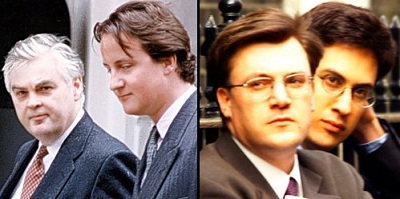
Won’t Anyone Think of the Special Advisers?

To quote @OwenBarder on Twitter yesterday morning: “Spare a thought for many Special Advisers today, caught in a horrible game of musical chairs”. Here are two:

1) The number of spads is very likely to increase to near 90.

Grant Shapps in his new role as Minister without Portfolio and Conservative Party Co-Chair will probably be able to appoint one or two spads; Chris Grayling’s promotion to Secretary of State for Justice will allow him to appoint two spads.

Normally, these changes wouldn’t increase overall numbers, as the old ministers’ spads would lose their jobs; however, since both Baroness Warsi and Ken Clarke will still be attending Cabinet, it seems highly likely that both will keep their spads.

Further, as David Laws is being brought back into government, it seems likely that Nick Clegg will push for him to be allowed to appoint a spad in Laws’ cross-departmental role.

2) This reshuffle will show whether spads under the Coalition are more like those under the previous Conservative or Labour governments.

Under the Conservative governments (1979-97), there were more spads who remained in the same departments and served multiple ministers over long periods of time. These represented relatively stable ‘expert’ spads who knew the brief, had connections, etc. and were able to assist incoming ministers. By contrast, Labour had a generally higher turnover of spads, meaning that when their minister left, they were more likely to leave the department (either to follow their minister or to leave government entirely).

One test of this will be whether Jonathan Caine remains a spad at the Northern Irish Office. He was a spad there for five years under John Major and he was brought back in 2010 to work for Owen Paterson. We will see if Theresa Villiers will become his fourth Secretary of State, if she’ll replace him for her own choice of spad, or if she’ll be allowed to do both—returning to the tradition of having two spads in the Northern Irish Office that characterised the Labour governments.

Will the Jeremy Hunt vote unravel the coalition? Dream on

Martin Kettle in the Guardian

…the coalition faces pressing decisions about how to renew itself. And, by coincidence, that is exactly the theme of two thoughtful reports published this week which both draw on continental coalition experience.

As one of these, The Politics of Coalition by Robert Hazell and Ben Yong, of the Constitution Unit, points out, the Conservative-Lib Dem coalition has gradually slipped from being a government marked by harmony to one characterised by increasing differentiation, especially in parliament. If year three is not to be marked by further partisan démarches and squabbles, and by slipping poll ratings, the government is going to have to grip the political agenda more effectively than it is currently doing.

The second report, with the Sheareresque title A Game of Two Halves, written by Akash Paun for the Institute of Government, is more proactive. It argues for a midterm review and a renewal plan that will carry the parties through to the final year of the parliament, though not for a wholly new coalition programme. Paun wants the coalition to prioritise more, and to copy Sweden’s way of differentiating between core coalition policies which are sacrosanct and others which will be open to more debate and differentiation.

Full article:

http://www.guardian.co.uk/commentisfree/2012/jun/13/jeremy-hunt-vote-coalition-split

UCL Insights

UCL’s research newsletter: read the full text

No Surprises: more spads for No. 10?

David Cameron has come under fire from some Tories who, believing the Government to be lacking direction, have called for the appointment of more Conservative special advisers (spads) to the No. 10 Policy Unit (see Neil O’Brien’s article for the Financial Times). They argue that the Government has placed too much emphasis on peripheral issues – such as reforming the House of Lords and introducing same-sex marriage – to the detriment of the Coalition’s primary objective: the economic recovery. How has it come to this?

In May 2010, Cameron and Clegg had been determined to reverse the trend begun under New Labour of employing large numbers of special advisers (spads).  The No. 10 Policy Unit was consequently stripped-back, leaving it unable to operate effectively.  The Government soon realised this, and in early 2011 a more generously staffed Policy and Implementation Unit was created.

The question was: how should it be staffed?  It was decided that, because the Policy Unit was intended to serve both the Prime Minister and the Deputy Prime Minister, the group should be staffed by civil servants.  The reasoning was that Conservatives would be unlikely to follow advice given to them by Liberal Democrats, and vice versa.  The non-partisan civil servants, however, could offer advice free from political ideology—in theory, anyway.

Under the Coalition, the Civil Service has started to exert more influence.  Firstly, by its commitment to Cabinet government as a means of reaching consensus, the Coalition has bolstered the position of the Civil Service.  Secondly, the Civil Service has been encouraged to become more involved in matters of policy.  This latter point is a source of frustration to some Conservatives, who feel that departmental policies are being undermined by technocratic measures proposed by civil servants.  This, they argue, has led to a lack of coherence across government (James Forsyth, writing in the Spectator, examines this issue).  It taps into the long-held suspicion of civil servants as impractical and/or lacking in political nous.  And so some Conservatives believe that Cameron needs to regain political control over the Policy Unit by appointing more Tory spads.  As Charles Moore writes, ‘Conflict is usually better institutionalised than suppressed.’

Further information: