Press Release: Cameron delivers Brown’s project on rules of succession, but not all plain sailing

Press Notice
Friday 28 October: for immediate release

Cameron delivers Brown’s project on rules of succession, but not all plain sailing, says constitutional expert

Commenting on today’s announcement in Perth of the planned changes to the rules of succession, Director of the Constitution Unit Prof Robert Hazell said:

“It has been a longstanding aim of successive British governments to end the discrimination in the laws of succession.  Gordon Brown went to the Commonwealth conference in 2009 with the same objective as David Cameron, but failed.  Since then there has been a lot of work behind the scenes to get the other 15 realms on board.  The tide of goodwill towards the monarchy following the royal wedding in April and the Queen’s diamond jubilee next year provides the perfect window of opportunity to make the change.”

“But it is not all plain sailing” Prof Hazell continued.  “The UK cannot legislate for the other 15 countries.  In Australia the six states claim a separate relationship with the Crown, and it may require their separate consent.  In Canada the federal government will certainly have to gain the consent of the provinces, including Quebec.  In both countries it will revive the republican issue.”

“Questions will also be asked about why the discrimination against Catholics is only to be partially removed.  The prohibition on the Monarch being a Catholic will remain, because the Monarch is Supreme Governor of the Church of England.  Catholics in Britain might be willing to accept that, although their numbers are now broadly equal to Anglicans.  But in the 15 realms Catholics outnumber Anglicans by three to one, and they may be less understanding”.

Notes for Editors

  • The UK is following the example of other European monarchies, most of which have changed their rules of succession already to make them gender neutral.  Sweden changed their law in 1980, Holland in 1983, Norway in 1990, Belgium in 1991, Denmark in 2009 (with a referendum), Luxembourg in 2011.  Only Spain, Monaco and Liechtenstein retain male primogeniture.
  • 11 private member’s bills have been introduced into Parliament to reform the Act of Settlement.  Successive governments have supported the principle of the change, but have said that it required government legislation.  Only the government can negotiate with the other realms.
  • Prof Hazell is available for interview 0207 679 4971, or contact our Press Officer Brian Walker on 07892 176347.
Royal Succession rules: view from the Realms

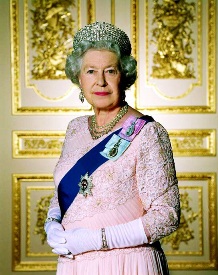
HM Queen Elizabeth IIPost by Anne Twomey, Associate Professor at the University of Sydney Law School

Changes to the rules of succession will be one of the items discussed at the Commonwealth Heads of Government meeting in Perth on 28-30 October.  These changes include removing the priority given to males over females, and removing the disqualification of people from the line of succession if they marry a Catholic.

Not all Commonwealth countries have to agree to such changes, because most are republics.  It is only the fifteen other ‘Realms’, of which Her Majesty is Sovereign, that are potentially affected.  They range in size from Canada and Australia at one extreme to St Kitts and Nevis and Tuvalu at the other.

Westminster no longer has any power to legislate for these countries.  Any changes the UK makes to the laws of succession will not apply to those Realms, unless the local law of the Realm picks up and applies the British law, or simply identifies its Sovereign by reference to whoever is Sovereign of the United Kingdom.  In Tuvalu, for example, Her Majesty is Queen at the request of the people of Tuvalu.  The office of Sovereign extends to her heirs and successors, according to the law of Tuvalu, but in the absence of such a law, the British law of succession applies.   In contrast, in New Zealand, the Act of Settlement has become part of New Zealand law and can only be changed in its application to New Zealand by the New Zealand Parliament.  So unless the New Zealand Parliament changes its law of succession, the old law will continue to apply, regardless of any change made in the United Kingdom.

Matters become more awkward in the federations.  In Australia, whether the federal Parliament has the power to enact a law changing the rules of succession, or whether it requires the cooperation of all the State Parliaments remains debateable.  In Canada, the matter is even more uncertain.  A constitutional amendment in relation to the office of the Queen requires the passage of resolutions by both Houses of the federal Parliament and all the provincial legislatures.  It is unclear whether such a law would amount to a constitutional amendment.  However, if the consent of all the provinces is required, difficulties might arise in getting the consent of Quebec.

The United Kingdom is perfectly entitled to change its laws concerning succession to its throne at any time without needing the consent of any other country.  The ‘convention’ set out in the preamble to the Statute of Westminster 1931, which required the parliamentary consent of certain Dominions, is out-dated and arguably no longer applicable.  However, if the British Government places importance on maintaining a single law of succession across all of the Realms, then this may be more difficult to achieve, given the constitutional difficulties in some of the Realms.  The discussion at CHOGM will be an important first step in this process.

More information:

Royal Wedding: congratulations, or commiserations?

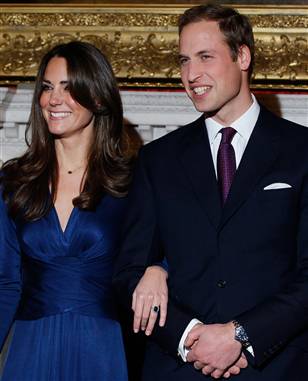
While we must all be happy for Prince William and Kate Middleton on their wedding day, we must also be aware of the heavy burdens which will be thrust upon them. Prince William was born into the Royal family and had no choice; but for Kate there was a choice.  She could have remained a private person; but from now on she will become public property.

Members of the Royal family do not enjoy some fundamental human rights which the rest of us take for granted:

  • They have very little privacy.  The rest of us have a right to private and family life.  William and Kate will be pursued by photographers wherever they go.  Their children will also be the subject of intense media interest.  Celebrities choose to be in the public eye; Royals have no such choice.
  • They have no choice of career.  William’s choices are effectively limited to military service or charitable good works.  Senior members of the Royal family cannot go into business.  Kate has already given up her job in preparation for the wedding
  • They have no freedom of speech.  Prince William is not free to say what he thinks, in particular on anything remotely political.  Although Kate is less restricted, she also has to be extremely careful not to be drawn into political or public controversy
  • They have no freedom of religion.  If Prince William or Kate were to become a Roman Catholic, he would have to step out of the line of succession and renounce any claim to the throne
  • Members of the Royal family are not free to marry whom they wish.  Royal marriages require the consent of the sovereign; and that consent depends upon government approval.  Government approval was withheld from King Edward VIII’s proposed marriage to Wallis Simpson in 1936; and from Princess Margaret’s proposed marriage to Peter Townsend in 1955.

The burdens of monarchy were clearly brought out in the film The King’s Speech. That depicted graphically the loneliness of the position, the constant pressure to put on a good public performance, and the difficulty of finding close confidants with whom to share the burdens.  To that must now be added the insatiable demands of the modern media, who will be watching their every move.  We wish them well; but we should also understand what burdens they assume in our name.